Trinitie, Cam, and Maz's Story
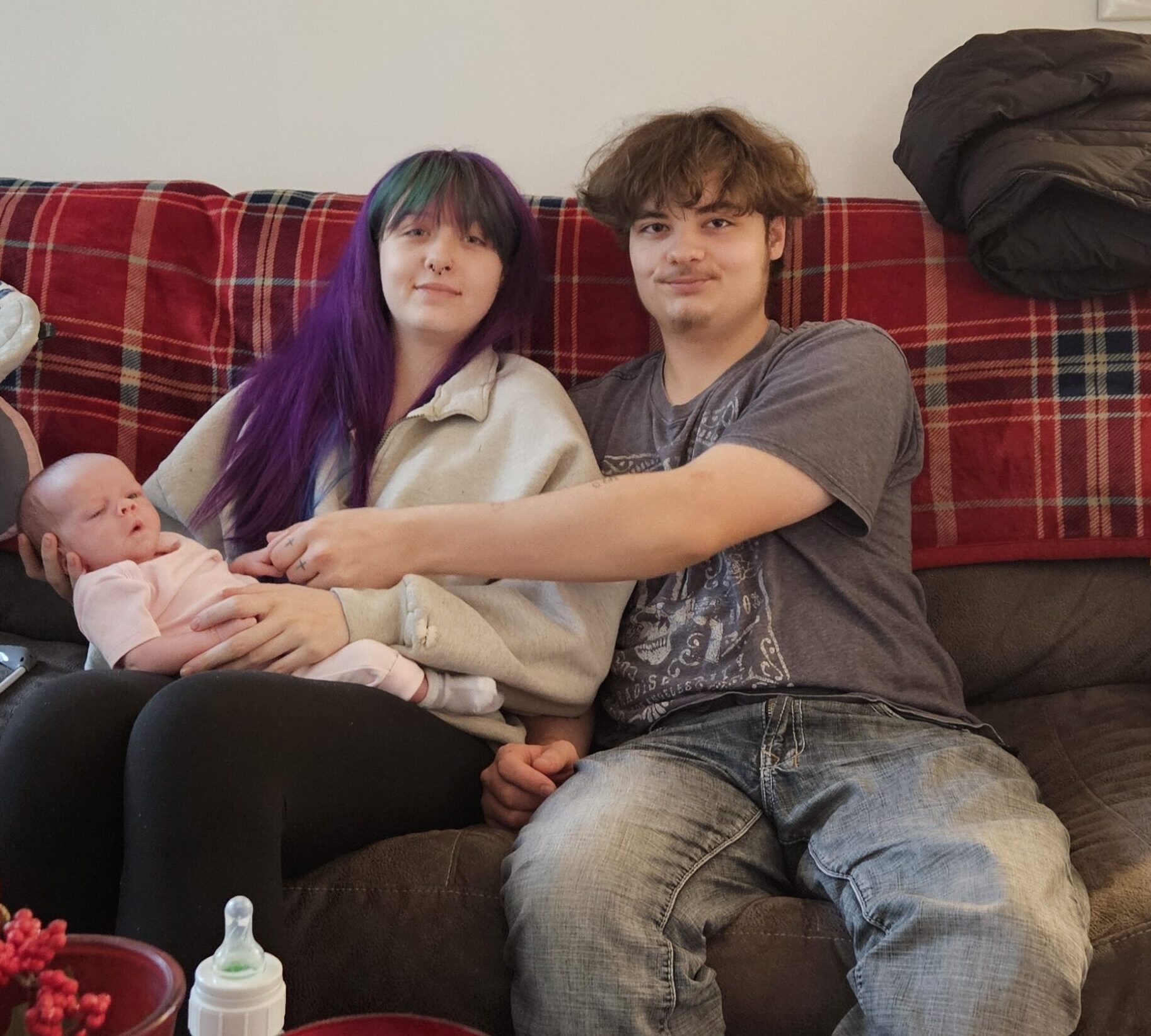
On a snowy day in December, Trinitie holds 3-week-old Mazarine on the couch while her partner, Cam, prepares a bottle in the kitchen. Their apartment is beautifully furnished and decorated with original art all over the walls, despite the young family having only moved in a few weeks prior.
“Most of the art was made by family members,” says Trinitie.
Trinitie, 21, and Cam, 20, are one of the first families in Preble Street’s newest program, the NEST, a Transitional Living Program for pregnant and parenting youth ages 16-21.
Both Cam and Trinitie grew up in southern Maine. They had been staying with family but were told they’d need to leave once the baby was born. Facing the possibility of homelessness with a newborn, they reached out for help. Thankfully, the NEST had just launched, and Preble Street Teen Services caseworker, Naomi, began working with the couple so they could be housed before the baby was born. Baby Mazarine had other plans.
“I was due on December 12, and we were supposed to move in on December 1,” shares Trinitie. “But she ended up being born at the end of November, so it was just Cam and our Preble Street caseworker on move in day trying to get the place ready. The hospital was great, though, and I was able to stay there until we had the apartment.”
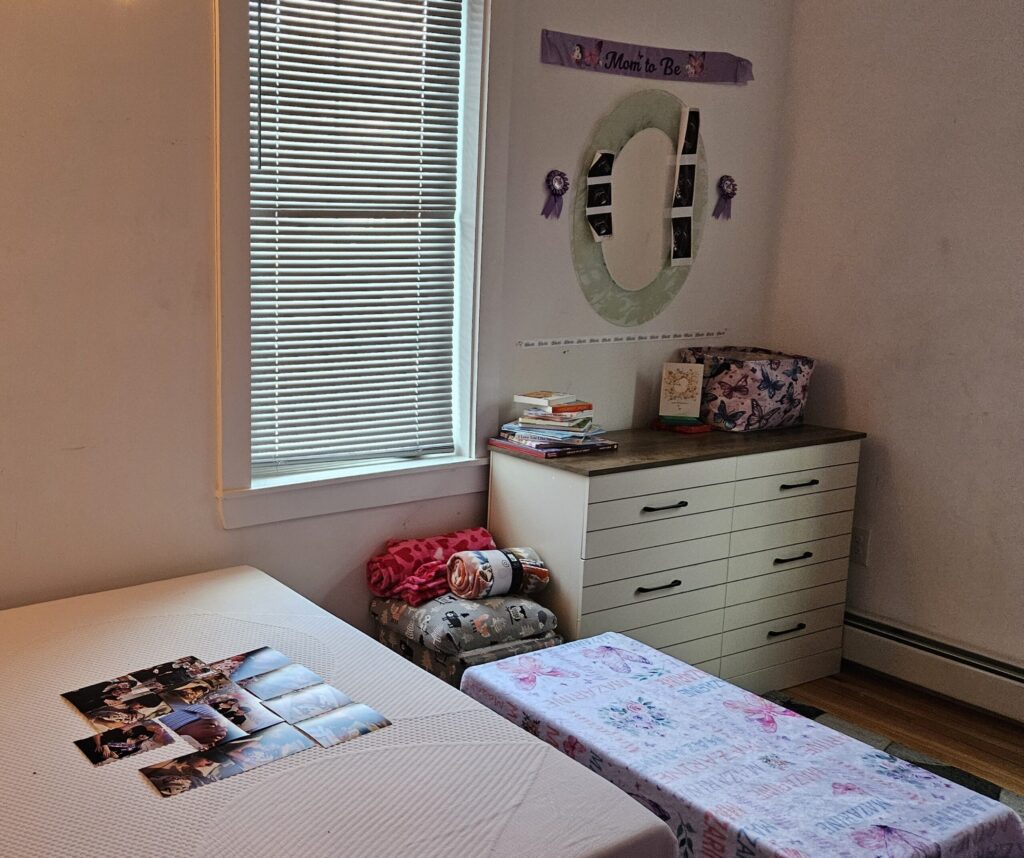
Mazarine’s nursery
As part of the NEST program, the family’s caseworker visits often to help them set and reach their short and long-term goals and to help them get to appointments. They also have a therapist that comes to the apartment to support the family as they settle into this stage of life.
“We want to get into more stable careers for both of us,” says Trinitie. “He wants to do culinary, and I want to be a tattoo artist or a counselor. I have a bunch of things that I can do. I have a whole career plan. I want to get a bus and make it into a tattoo parlor and make it a mobile thing, where I’m also a counselor.”
Thinking about baby Maz, Trinitie shares, “I just want her to be happy and spoiled. That’s it. Just want her to be happy and spoiled, and healthy. Our biggest concern was just not having housing. But now we’re here.”
Youth homelessness and support
“There needs to be more options for teens who need a place to live,” shares Cam, reflecting on his experiences. “When I was younger, I knew a bunch of people here that were 17, and they all either got kicked out or were homeless for other reasons. People say oh it’s just druggies, but some kids’ parents just kick them out for other reasons, or they leave because of domestic violence situations.
“There’s a lot of homeless teens out there, especially around here in Biddeford right now. People I went to school with I’ll see out there. It’s not the older people that you normally see. Even when they say there’s support systems it’s a little difficult to find some because there’s wait lists and a bunch of different hoops you have to jump through.”
“School should definitely do a better job teaching about finances and real life things,” says Trinitie. “I didn’t know that I had to go to the post office and report a change of address. It was just one thing that I had to learn on my own. A lot of kids have parents to teach them these things, but for the kids that don’t it would be helpful. Or how to get a job? And there are things that were so simple and small that I should have known how to do, like paying the rent or going for Wi Fi that I just didn’t know how to do. The last four years, it could have been really useful to have that information already presented to me.”
“People need to reach out more,” adds Cam. “But teens just don’t like reaching out like that. Even as a young adult, I still find it hard to say ‘hey, I need help.’ It’s not a bad thing to ask for. I feel like there should be more encouragement to go out and ask for help.”
Cam and Trinitie reached out for help. Today they are happily, safely housed with their healthy, happy baby.

Brian’s story
Brian Hester is a proud Marine Corps Veteran. If you ask, he’ll tell you he “loved every minute” of his two-and-a-half years of service with the Marines. But, like many Veterans in Maine and all over the U.S., Brian cycled in and out homelessness after leaving the armed forces, battling addiction and a substance use

Peter’s Story
Peter was homeless for eight months, sleeping on the street and in different shelters in Augusta and Lewiston. He’s an Air Force Veteran, originally from Madawaska, Maine, who lost housing when his landlord increased his rent with only a month’s notice. “I had an apartment for seven years. New landlord bought it and told me

Ron’s Story
“I’ll say it 1000 times over, the VA saved my life,” shares Ron. Ron is a former U.S. Marine. He currently lives at a residential facility in Lewiston, Maine, operated by Veteran’s Inc., a nonprofit that provides support services to Veterans and Veteran families across New England. They are a trusted partner of Preble Street, working