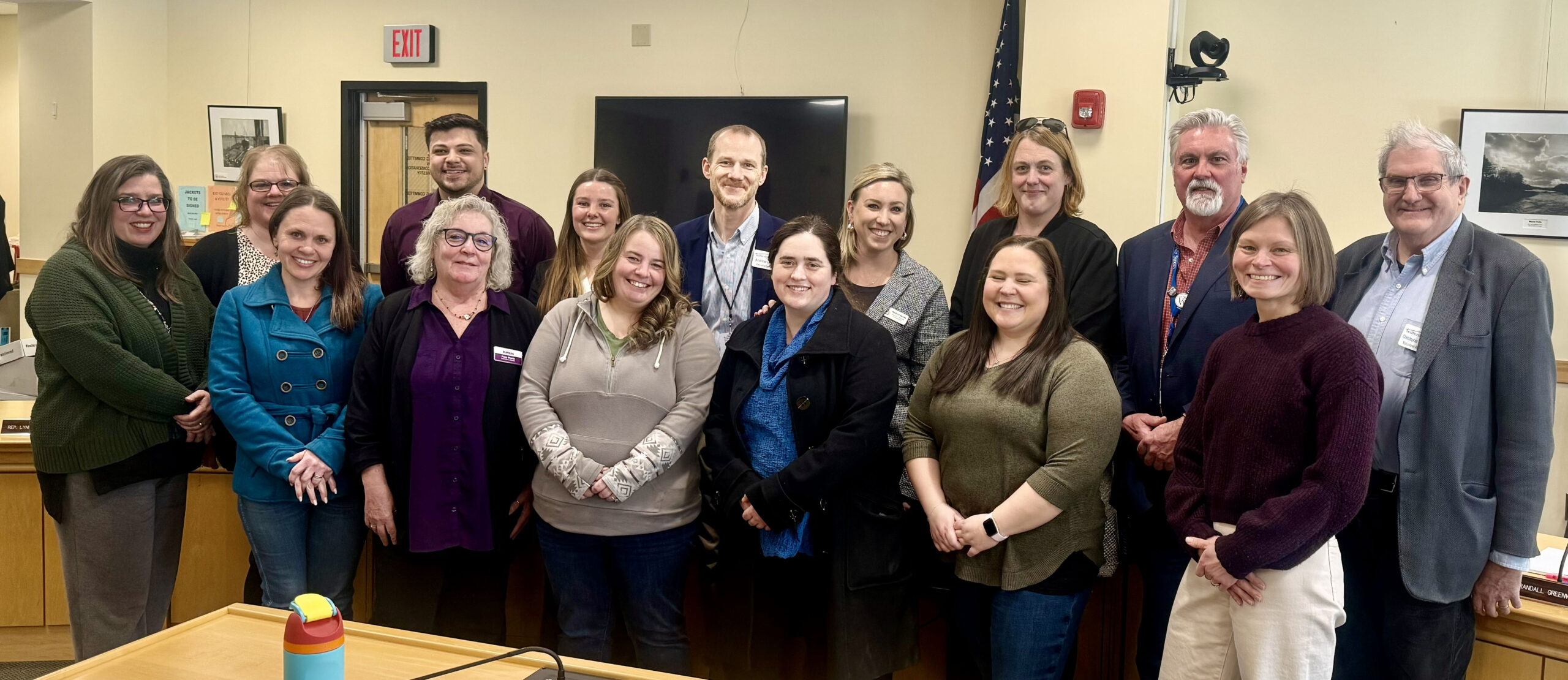
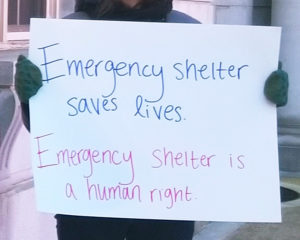
Maine needs and deserves safe, accessible, professionally run, and sustainable emergency shelters that can meet the needs of the growing number of individuals and families experiencing homelessness in our state. On Tuesday, February 10, 2026, shelter executive directors and staff from across the state went to Augusta to advocate for a sustainable funding source that will support emergency shelters in Maine and their services to people from all of Maine’s 16 counties.
Senator Curry, Representative Gere, and Members of the Committee on Housing and Economic Development,
My name is Mark Swann, and I am the Executive Director at Preble Street. The mission of Preble Street is to provide accessible, barrier-free services to empower people experiencing problems with homelessness, housing, hunger, and poverty, and to advocate for solutions to these problems. Preble Street’s 164 shelter beds at four emergency shelters in Portland and Bangor are full almost every single night of the year to meet the needs of vulnerable Mainers. More than 500 individuals used our shelters last year, representing all of Maine’s 16 counties.
I am writing today to urge you to support LD 2124, which will help stabilize our homeless response system and keep open life-saving shelter beds from Presque Isle to Sanford. In the last session, this legislature allocated one-time funding to shelters statewide, providing critical relief to a system facing ever-rising costs and longer stays due to housing shortages and other barriers. Without that funding, hundreds more Mainers would have been sleeping outside this winter.
Emergency shelters play a critical role in our communities and offer so much more than just a bed and a meal. Shelters connect people to life-saving services, like healthcare, case management, and recovery programs and services. They support people in finding employment and are often the first step toward long-term housing. Shelters also divert the most vulnerable from relying on the most expensive services like hospital emergency rooms, jails, police, emergency response systems, and the child welfare system.
Just like everything else, the cost of operating a shelter and keeping the people who need it safe and supported continues to increase. Today, you’ve heard from several Maine shelters at risk of closing. Last spring, the York County Adult Shelter closed, placing an even greater strain on the remaining shelters in Maine. And Bangor’s Hope House is only open today because a year ago, Preble Street was able to assume operations after learning that financial considerations were going to lead to the closure of that shelter and its 56 beds. Any further loss of shelter beds leaves even more people without a safe, warm bed and will cause human suffering. But with permanent and sustainable funding of Maine’s shelter system, we can prevent that suffering.
I want to introduce you to a few people whose shelter stays were turning points in their journey to secure housing and stability. Landon had been living unsheltered in the Portland area for seven years. During that time, he had frequent interactions with law enforcement and was well known in the neighborhood as a challenging person to interact with. Once he began staying at the Elena’s Way Wellness Shelter that changed. Almost immediately, his demeanor softened, and he was able to engage calmly with his caseworkers and fellow shelter guests. He got a job in construction. After only four months working closely with his case worker, he moved into his own apartment, where he is continuing to do well. For Landon, a stable place to rest his head each night, steady casework and services, and a healing environment made all the difference. Now he is facing a brighter future and is no longer impacting the city’s emergency response resources. This is a personal, community, and systems win.
Dana grew up in the foster care system and became homeless as a teen. She had severe behavioral issues and substance use disorder. She was unhoused and engaging in risky behaviors when she became pregnant in her twenties. At this time, she began staying at Elena’s Way, where a stable environment and casework support allowed her to begin treatment for her substance use disorder and get regular prenatal care. Thanks to her time in shelter, she has now been housed and sober for two years, and after turning her life around is in the final steps of reuniting with her daughter. She is planning to break the cycle for her child.
Landon and Dana’s stories illustrate a broader truth that housing navigators and social workers know: helping someone stabilize and develop a plan to exit homelessness is significantly easier when they are staying in a shelter. A recent California study found that unsheltered individuals experienced homelessness for twice as long as those who were in emergency shelters. People who were unsheltered were less than half as likely as individuals staying in shelters to have received housing navigation support in the past 6 months. While we work to create and build permanent, long-term housing and homelessness solutions, it is important to recognize that shelters often operate as stepping stones toward housing. Without them, the solutions that we are all working toward become much harder to put in place.
Every day, the professional staff at Preble Street see the life-changing impact that consistent shelter access and connection to services can have for people experiencing homelessness. Youth fleeing violence can find safety and healing, people with chronic health conditions can better manage their health, and individuals can more easily maintain employment.
LD 2124 is a wise, forward-thinking bill that ties shelter operating subsidies to a consistent funding stream. We respectfully urge the committee to support the long-term sustainability of our state’s homelessness response system by passing LD 2124.
Thank you for your time and consideration.