




Human trafficking happens everywhere, including right here in Maine. Children and adults of all genders, ages, and races are forced to do farm labor and many other types of work through threats, physical and sexual violence, and psychological coercion. In the summer, farms hire more seasonal and day laborers for the harvest and planting season, and this increase in demand for labor also puts vulnerable populations at greater risk of labor trafficking and exploitation.
Hailey Virusso, director of Preble Street Anti-Trafficking Services (ATS), explains, “When you lack basic needs you have a higher risk of exploitation, not having a safe place to live, not having food, not having access to clean water.” Traffickers are skilled at exploiting people’s basic needs and entrapping people. “The employer is paying them less than they agreed upon, maybe they’re not being paid at all, and the housing provided is substandard. They control your transportation, but the people in charge tell them that they can go. Buty, you can’t really leave,” says Hailey.
Thanks to funding from the Howard G. Buffett Foundation, Preble Street’s Anti-Trafficking Services (ATS) team has a dedicated Labor Trafficking and Exploitation Services and Identification Program that does seasonal outreach to connect specifically with survivors of labor trafficking. This happens leading up to and during the summer months, when there is high demand for farm labor and seasonal workers.
This program provides access to low-barrier and culturally appropriate resources and services, like case management, basic needs, shelter and housing support, immigration, civil/criminal legal referrals, and more, to survivors of labor trafficking and exploitation. The funding from the Howard G. Buffett Foundation also finances a partnership with the Maine Mobile Health Program: a community health center and Maine’s only farmworker health organization, dedicated to connecting Maine’s farmworkers to healthcare services and resources. Their support boosts ATS’s ability to provide survivors of labor trafficking and exploitation with gold standard medical and behavioral health care.
Daniella Cameron, deputy director of Preble Street, says, “healthcare systems are a key opportunity for trafficking victims to get the tools they need to exit their trafficking situation.” Human trafficking is a health issue, and survivors are at risk of significant health issues, like physical injuries, untreated chronic conditions, dental problems, and more. Partnering with the Maine Mobile Health Program presents an excellent opportunity for ATS to outreach and connect with survivors, providing them with high quality medical care and the resources to empower survivors to leave their trafficking situations.
How can you help?
- Wishlist: To donate needed items for survivors, please connect with the Preble Street Receiving Center to drop off in-kind items. Most requested items include: Bus passes, Uber gift cards, gas cards
- Backpacks or bags
- General Toiletries
- Culturally inclusive toiletries, hair-care products, or pantry items
- Comfort clothing (sweatpants, lounge pants, sweatshirts, sandals)
- Journals, adult coloring books, art supplies
- Have Housing to offer? Safe housing is often one of the most expensive costs in supporting survivors of human trafficking. If you or anyone you know have a housing opportunity you would like to connect about, please reach out to us!
- Donate: Feel confident that your gift will directly support human trafficking survivors; we use financial contributions to help survivors in their transition out of their trafficking experiences. Learn more.
- Volunteer! Lend your professional expertise (medicine, law, mental health, etc.) to support the people we work with. Learn more.

Staff highlight: Annick Nzeyimana – Walking alongside clients
Preble Street staff are #CompassionInAction, and we want you to get to know them! This month we’re introducing you to Annick Nzeyimana, Case Worker, Anti-Trafficking Services. How long have you worked at Preble Street? I have been working at Preble Street and in the Anti-Trafficking Services program for the past two years. What do you like most about your role? What
Human Trafficking Awareness and Prevention in Maine
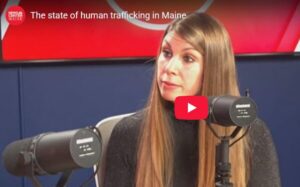
Hailey Virusso, Director of Preble Street Anti-Trafficking Services, spoke with News Center Maine about human trafficking in our state. Watch here. ACTION ALERT: On Wednesday, February 4, Maine’s Health and Human Services Committee will hold a public hearing on LD 2136, An Act to Support Victims of Trafficking in Maine in Response to Federal Funding

“Anti-poverty work is trafficking prevention.” – an interview with Alicia Peters
Alicia Peters, Ph.D., is an associate professor of anthropology at the University of New England. Her most recent book, “Trafficking Trajectories: Vulnerability, Failed Systems, and the Case for Prevention” focuses on the experiences of trafficking survivors in Maine and New Hampshire. Prevention, survivors’ needs Since your focus most recently has been on Maine and New