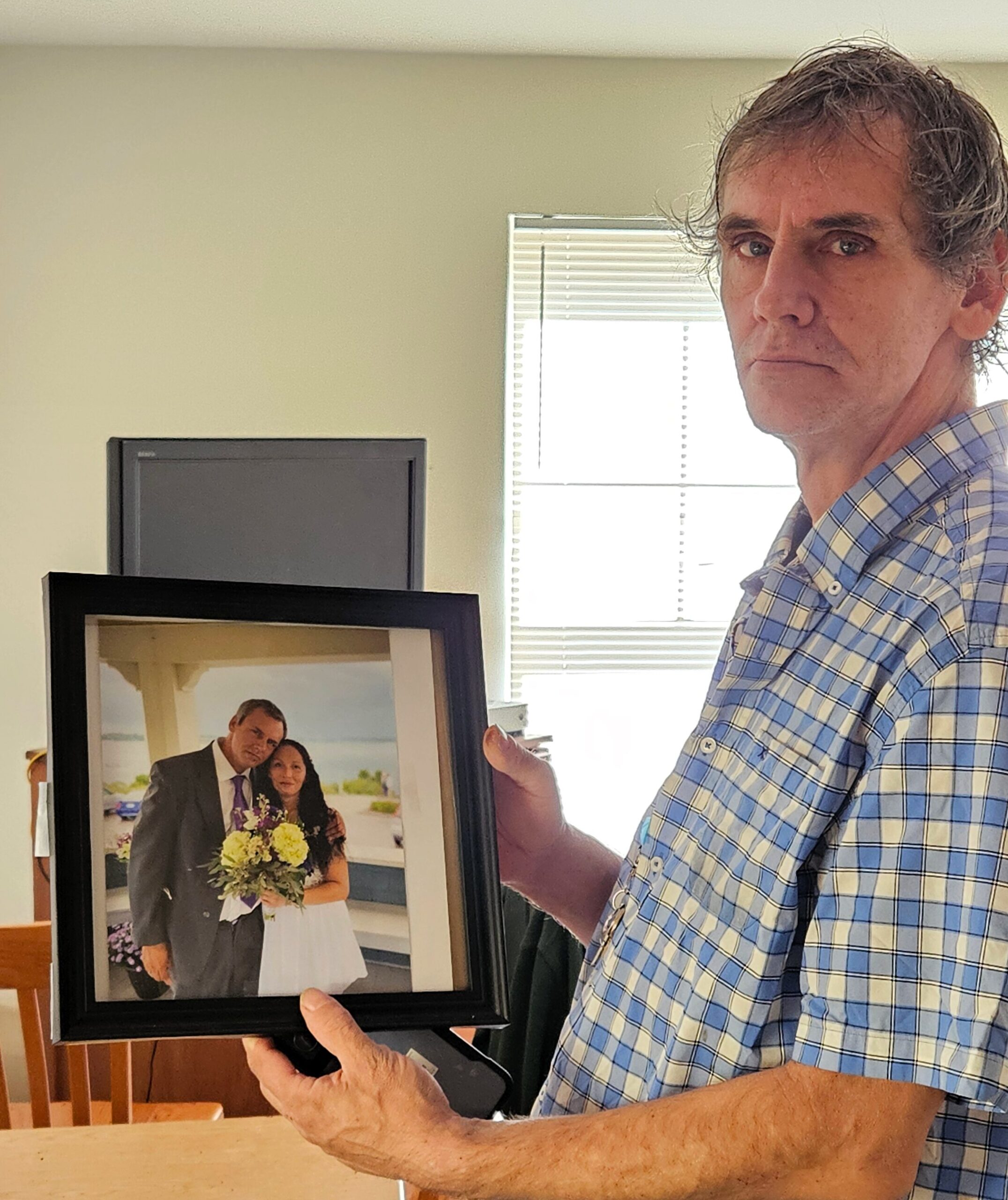

Pete, 56, holds a photo from his wedding day. “I loved everything about Samantha. And we did everything together. She was my soulmate. She planned everything about the wedding day. Those purple and gold flowers…they were her favorite colors. I made sure her urn has those colors for her.”
Today, Pete lives in an apartment at a Preble Street permanent supportive housing program, Logan Place. But it was a long, difficult road to get here.
Born and raised in Portland, Pete left Maine in his early twenties to travel. He learned to cook at restaurants across the country, including places in Miami, Las Vegas, California, and Vermont. Upon returning to Portland in the early 2000s, he fell into chronic homelessness.* About 20 years ago, he met Samantha while staying at the former Oxford Street Shelter.
“We were friends for a long time. Then we dated for about eight years before getting married. We were homeless together, then housed together.”
Pete smiles as he talks about their life.
“Especially once we moved into our home, we were really happy,” he says. “We went out to eat together and cooked together. We both loved Mexican food. She was an awesome cook and baker. We thought we had it all. But then, almost overnight, we lost our housing. Just like that, we became homeless again together. She ended up dying. She couldn’t make it through the homelessness again. It’s too hard. I miss her every day. Every day.”
Pete had been with Samantha for most of his adult life, and the loss was devastating. After her death in fall 2024, Pete reached out for help from Preble Street Health Services at the Preble Street MaineHealth Learning Collaborative. Staff there helped him secure a bed at Elena’s Way Wellness Shelter, and then housing in an independent apartment unit.
“It didn’t work out well for me there in that apartment,” Pete sighs.
Still grappling with loneliness and grief, Pete allowed a friend and his brother who were both unhoused to stay with him, which resulted in repeated violations of the guest allowance policy in his lease. This is a common struggle for people who have experienced chronic homelessness. There is often a sense of guilt that they have made it off the street while their friends are still trying to survive outside.
Pete keeps his wedding photo and Samantha’s urn by his bed in his apartment at Logan Place
Eventually, Pete received an eviction notice in spring 2025. His caseworker referred him to Pine Tree Legal Assistance and Preble Street Rapid Re-Housing for support. But due to the stress of the pending eviction and worry about losing his wife’s belongings in the process, Pete suffered a mental health crisis and was hospitalized.
After his hospitalization, Pete returned to homelessness, staying at the City of Portland’s Homeless Service Center for three months before being selected for a unit at Logan Place. “Luckily, my number came up here. I needed a place like this. If they hadn’t kept a spot for me on the list, I would still be homeless right now,” Pete shares.
Permanent supportive housing programs like Logan Place, Florence House, Huston Commons, and Maine’s planned Home for Good sites not only provide an apartment (which tenants contribute rent payments for), they also offer 24/7 on-site social work services. This makes them especially helpful for people who have experienced chronic homelessness who often need more support in maintaining their housing.
“Staff at Logan Place have helped me a lot. They help me with food, and just being able to talk to somebody when I need to is nice, too. I get along well with my neighbors. It’s good here.”
Pete moved into Logan Place shortly before the 2025 holiday season. For Christmas, staff gifted him picture frames for his most precious items: his wedding pictures with Samantha.
*HUD considers someone to be chronically homeless if they have been experiencing homelessness for at least 12 months or on at least 4 separate occasions in the last 3 years, as long as the combined occasions equal at least 12 months.
You can help Mainers like Pete find their home for good:
Read more stories like Pete's:

Maine can make a difference for trafficking survivors
UPDATE APRIL 6, 2026: URGENT ACTION! Maine survivors of human trafficking, some as young as 13-years-old, are being forced to wait for services due to a lack of funding. Using the template below, please contact the Appropriations and Financial Affairs committee (AFA@legislature.maine.gov) TODAY and tell them to provide $317,000 in one-time funding to support survivors of
“People should not be discarded,” a conversation with Pastor Jeff Logan
Preble Street’s work is never done in isolation. We are continuously making connections with other social service providers and nonprofits to better serve clients and the needs of the community. This month, we are highlighting Pastor Jeff Logan, Executive Director and co-pastor at Grace-Street Ministry in Portland. Share a little bit about yourself and what brought

Home for Good
“The turning point came when my father was accepted at Huston Commons. This housing development … provided more than just shelter; it offered a comprehensive support system tailored to the needs of my dad. At Huston Commons, my father found safety, stability, and a community that helped him rebuild his life. The onsite support services, including harm