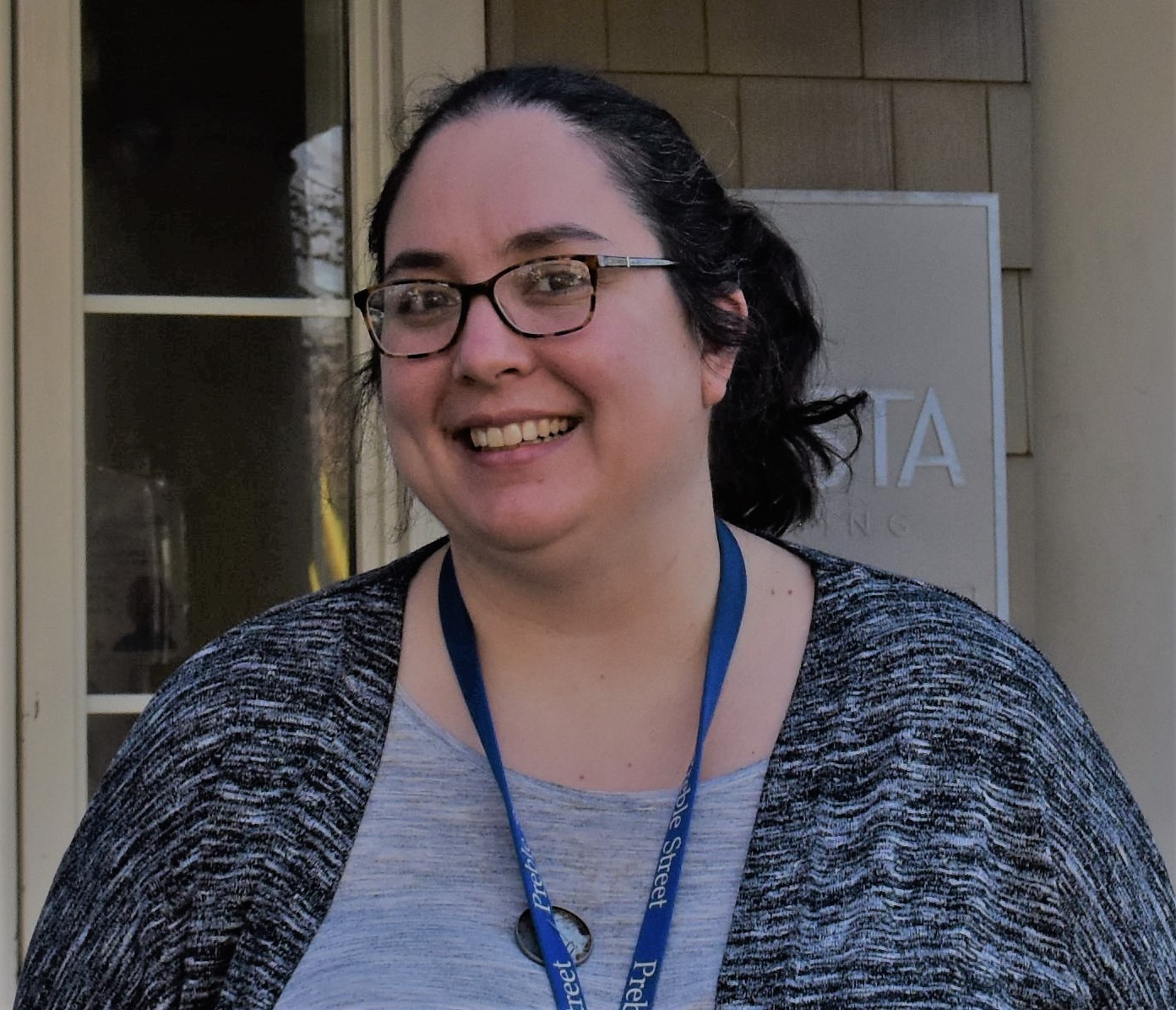


1. It’s about relationships, not just services.
Caseworkers don’t just help connect people to food and housing. They focus on building true human connections with the individuals they work with. Listening, treating each individual with dignity and respect, and getting to know someone’s story are all important parts of the work. At Preble Street, social workers see the whole person and accept them as they are, instead of the people we want them to be. They believe everyone has value and deserves care, no matter their situation.
2. Clients are partners in the process.
Caseworkers work with people, not for them. Clients create their own goals and determine what steps they want to take to get there. Caseworkers help guide them through these processes, offering knowledge of the various systems, available resources, and ensuring the client that they are not alone as they work to regain control of their life.
3. Progress is rarely linear.
As clients work to get shelter or housing, to find employment, or to address substance use, progress isn’t always straightforward. The current economy and systems mean that resources are often limited or nonexistent, with long waitlists for some services. A person may take a few steps forward and a few steps back as they work toward their goals. Sometimes the most important thing a social worker can do is simply be there for someone during difficult moments.
4. The work is both personal and systemic.
Caseworkers help meet people’s immediate needs, but they also advocate for changes to the broken systems that cause homelessness, hunger, and poverty in the first place. As a social work agency, advocacy is a key part of Preble Street’s mission.

Maine can make a difference for trafficking survivors
UPDATE APRIL 6, 2026: URGENT ACTION! Maine survivors of human trafficking, some as young as 13-years-old, are being forced to wait for services due to a lack of funding. Using the template below, please contact the Appropriations and Financial Affairs committee (AFA@legislature.maine.gov) TODAY and tell them to provide $317,000 in one-time funding to support survivors of

“People should not be discarded,” a conversation with Pastor Jeff Logan
Preble Street’s work is never done in isolation. We are continuously making connections with other social service providers and nonprofits to better serve clients and the needs of the community. This month, we are highlighting Pastor Jeff Logan, Executive Director and co-pastor at Grace-Street Ministry in Portland. Share a little bit about yourself and what brought

Home for Good
“The turning point came when my father was accepted at Huston Commons. This housing development … provided more than just shelter; it offered a comprehensive support system tailored to the needs of my dad. At Huston Commons, my father found safety, stability, and a community that helped him rebuild his life. The onsite support services, including harm