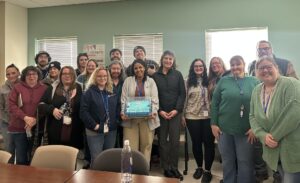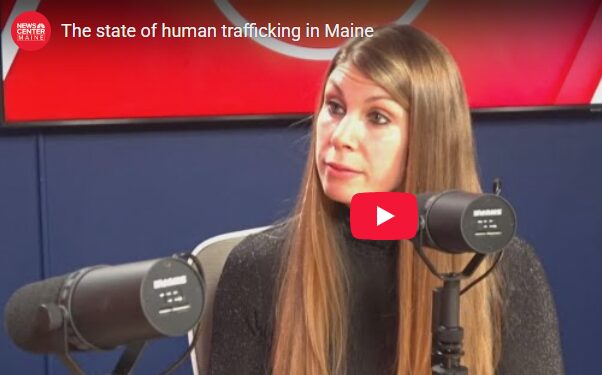
Hailey Virusso, Director of Preble Street Anti-Trafficking Services, spoke with News Center Maine about human trafficking in our state. Watch here.
ACTION ALERT: On Wednesday, February 4, Maine’s Health and Human Services Committee will hold a public hearing on LD 2136, An Act to Support Victims of Trafficking in Maine in Response to Federal Funding Cuts. If passed, this bill would provide one-time emergency funding to Preble Street Anti-Trafficking Services to replace federal funding that has been delayed. Please email HHS@legislature.maine.gov to tell them how important this funding is. Feel free to use the information in this article to support your case. THANK YOU!
“Just over two years ago, you showed up in our lives in a moment of crisis that came seemingly and suddenly out of nowhere. We were terrified and lost, and as the days and then weeks and then months dragged on, we didn’t know how we would get through it. We didn’t know how or when (or even IF) our teenage child would make it out of the coercive situation they had landed in and come back home (or at the very least somewhere safe) again. Your presence alone -- both calming and fiercely caring -- made functioning through our day-to-day lives feel more possible. Your unwavering, unconditional support held us up and carried us through this time as you listened intently and repeatedly validated our feelings of fear, anger, confusion, and helplessness. Beyond that, with your extensive expertise in exploitation and trafficking, the connections you have built over many years of your work, and the funding behind your Preble Street programs, you were able to guide us through interactions with law enforcement and the legal system, provide much-needed financial assistance, and eventually connect our child with a therapist who had exactly the background and experience needed to support their healing.”
Parents of a survivor served by Preble Street ATS
Every day, the Preble Street Anti-Trafficking Services (ATS) team provides this type of support and resources to survivors of human trafficking across Maine. Last year, they received over 300 requests for help and information and provided services to 132 people.
While sex trafficking is often the first thing that comes to mind when people think of human trafficking, there are many forms of labor trafficking happening in Maine. Across all seasons, ATS’s Labor Trafficking Outreach team conducts extensive outreach in Maine’s primary agricultural sectors. In this past year, most of the focus was on Aroostook County and Central Maine, where staff partnered with local organizations to support farm workers on potato, tomato, and blueberry farms. In December, they distributed over 1,000 pieces of winter gear to wreath makers experiencing labor trafficking in dangerously cold conditions.
Building trust has allowed the team to develop relationships with farmworkers, enabling our team to have a stronger sense of the needs and experiences of labor trafficking survivors in our state.
Along with providing direct services, the ATS team also trained over 500 providers across the state on anti-trafficking resources and intervention, including social workers, law enforcement partners, and medical partners. This training is so important in raising the visibility and awareness of trafficking in Maine.
The increasing challenges of anti-trafficking work
Increased ICE presence in Maine has made the community feel deeply unsafe and anti-trafficking work more difficult. Survivors are more hesitant to reach out for or access help, and traffickers use this to their advantage. This is a moment we must not turn away from. To prevent human trafficking is to cultivate safety – this is not safety.
Meanwhile, funding for services and resources that help prevent trafficking have been massively cut by the federal government. As Alicia Peters mentioned in our interview with her, the best way to prevent trafficking is to increase access to affordable housing, mental health and substance use disorder treatment, and other basic needs. The continuous attacks on food assistance, Medicaid, homeless services, and other resources are only making more people in poverty vulnerable to trafficking and other dangerous situations as they fight to meet their needs.
When we raise our voices to advocate for others, we are preventing trauma and harm in our communities. We must continue to stand up.

TAKE ACTION to Protect Maine’s Public Schools, Hospitals, Daycares, and Libraries from ICE
Tell your Maine legislators to support LD 2106! Increased presence of Immigration and Customs Enforcement (ICE) agents, as part of the dehumanizingly named ‘Operation Catch of the Day,’ is creating constant fear and anxiety for so many of our neighbors, leaving them scared to leave their homes, go to work, take their children to school, seek

“Anti-poverty work is trafficking prevention.” – an interview with Alicia Peters
Alicia Peters, Ph.D., is an associate professor of anthropology at the University of New England. Her most recent book, “Trafficking Trajectories: Vulnerability, Failed Systems, and the Case for Prevention” focuses on the experiences of trafficking survivors in Maine and New Hampshire. Prevention, survivors’ needs Since your focus most recently has been on Maine and New

Impact of current ICE actions on Preble Street
Leah McDonald, Vice President of Staff & Culture at Preble Street, shares how the recent surge of Immigration and Customs Enforcement (ICE) actions in Maine is affecting staff and their work. How would you describe Preble Street staff and the work they do? Preble Street staff — whether they are social workers or administrative employees —