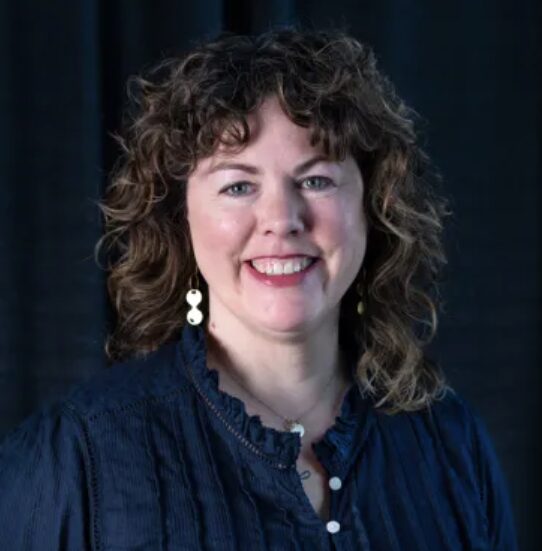
Alicia Peters, Ph.D., is an associate professor of anthropology at the University of New England. Her most recent book, “Trafficking Trajectories: Vulnerability, Failed Systems, and the Case for Prevention” focuses on the experiences of trafficking survivors in Maine and New Hampshire.
Prevention, survivors' needs
Since your focus most recently has been on Maine and New England, what are some things that most Mainers would be surprised to know about trafficking here?
I think the number one thing is that it does happen in Maine. People think that it’s something that happens in big cities or other parts of the country, but we’re seeing trafficking happening to people in our communities.
One of the surprising things that came out of my research was how close it was. When I started doing this work in Maine, I realized that I had connections to some of the survivors I had interviewed. One of them had worked at a bakery that I had frequented; one of the survivors was the aunt of one of my daughter’s closest preschool friends. I talked to law enforcement investigators who had encountered some of their high school classmates as part of the investigative work they were doing. It is happening all around us, and often in some of the industries that we most closely identify with in this state, like blueberry harvesting or seafood processing.
We know in Maine that survivors include teens and adults of all genders, foreign nationals and US citizens, individuals who, yes, may be trafficked for commercial sex work, but also for, drug selling and domestic work and hotel work and landscaping and agricultural labor and all of these other things. It’s really important that we talk about the full complexity of the issue, and especially those structural issues that contribute to trafficking.
In your conversations with survivors, what were the top needs that came up?
There were many, but the two biggest ones that I heard from survivors – as well as caseworkers and law enforcement – were safe, stable, secure housing and access to treatment for substance use disorder. If we had more affordable housing and accessible treatment options, less people would find themselves in trafficking situations.
Traffickers are skilled at recognizing and fulfilling the needs of their victims as part of the coercion. One of the biggest things that is needed is for people to understand how trafficking intersects with other issues. We’re at this point in time when so many of these systems and the social safety net are just being decimated. We need to address those unmet needs of the community, because those are the things that are going to actually strengthen the trafficking response. That’s something that we need to see everybody get behind.
What kind of policy changes would make the biggest impact in preventing trafficking, and how can policymakers better center the voices of people with lived experience?
We need to shore up systems to address the root causes of trafficking and prevent it from happening before it starts.
The narrative around human trafficking is that it’s strictly about interpersonal violence, but we need to think about it as structural violence. It’s about these systems that need to be strengthened. Trafficking isn’t just about the trafficker and the victim. It’s often easy to get people to rally around the idea of increasing prosecution and punishment of traffickers. But the reality is that anti-poverty work is trafficking prevention. Access to safe, affordable housing is trafficking prevention. And that is where I think we really need the most policy change.
Survivors should always be brought into the conversation. Look at the research that’s been done with survivors. Ask them to participate and be involved in designing policy and sharing their experiences about what works and what doesn’t. I’m so grateful to the survivors who agreed to be interviewed as part of my research, and I think those are the voices that really matter most. They are experts. They have lived through this.
Discussions about human trafficking have been very politicized because of the overlap with issues around sex work and immigration, and that means that survivors are often left out of those conversations as the political battles play out. But survivor perspectives often counter mainstream assumptions about trafficking, and so it’s really important to listen to what they have to say.
How do survivor perspectives counter mainstream assumptions?
There have been studies, one of them actually involved survivors in Maine, that have asked what survivors think should be done. And one of the big things that came out of these studies is that survivors don’t necessarily support a punitive approach to trafficking or an approach that is focused around prosecution. They often see strengthening the community or focusing on prevention and restorative justice approaches as much more effective than prosecuting their traffickers. I think that really goes against what most people who have not been directly affected by trafficking would think.
What are the biggest takeaways you want individuals to have about how they can get involved?
At the most basic level learning and understanding the needs of the community, knowing that it’s not about saving and rescuing people, but about treating them with dignity and respect.
And advocacy, reaching out to our state representatives to prioritize access to housing, to health care, strengthening economic opportunities for our communities and strengthening those related systems; that’s how people can be most effective in addressing trafficking. It might not have the name trafficking on it, but again, doing that work of strengthening housing, anti-poverty work, those are the kinds of things that we really need people to get behind.
Relationship with Preble Street
How did you first become aware of Preble Street Anti-Trafficking Services, and how has that relationship developed over time?
It has been a fantastic relationship. When I first arrived back in Maine, multiple people told me I needed to meet Daniella Cameron, who founded Preble Street’s ATS program. It has been a really rich, meaningful collaborative relationship ever since. Preble Street has invited me to participate in certain events, facilitating discussions with community partners on trafficking. I was involved as an action researcher evaluating some federally funded grant programs. I’ve interviewed Preble Street staff and learned so much from them about how to approach survivors and what their needs are, and about the landscape in Maine. I’ve had Preble Street case workers come and be guest speakers in my classes on human trafficking. We’ve collaborated on community events and trainings.
Hailey Virusso, Director of Anti-Trafficking Services at Preble Street, spoke to News Center Maine about human trafficking in our state
Alicia's work; history of anti-trafficking in U.S.
How did you first get involved with trafficking prevention and awareness?
The research for my first book and for my dissertation was looking at the implementation of the Trafficking Victims Protection Act (TVPA) and the varying conceptions of human trafficking that were held by everyone involved – from various government and social service perspectives and survivors as well, and what the impacts were on survivors.
What did you discover as you were writing that book that was surprising to you?
It was really the complexity of the trafficking issue. At that time, the TVPA was still very new. People had advocated for this legislation with very different perspectives of what they actually wanted it to do. Law enforcement mostly saw themselves responding to this kind of ideal victim who had been trafficked for forced commercial sex and not necessarily addressing or investigating other kinds of trafficking and other labor sectors. And then you had service providers who were trying to meet the needs of anybody who they encountered. And so, a lot of what I was looking at was how that impacted survivors and people who were kind of left out of the response or unable to access services or other protections.
Thinking about the difference between your research for your first book and for your second: What were the differences in the landscape?
It was exactly a decade later that I was conducting field work for my second book, and quite a bit had changed. When I did the research for my first book, the human trafficking response was really centered in urban centers and my field work was in New York City and Washington, DC. When I started the research for my second book, I’d moved to Maine and was really curious about what had happened in those 10 years.
My focus shifted from the legal response, to thinking more from a public health perspective, and about the role of structural vulnerability. And that was something that people in law enforcement were starting to talk about but didn’t necessarily have the language to describe when I did the research for my first book. The more I started talking to people in Maine and having conversations, these vulnerabilities that survivors were facing were something that providers and law enforcement alike were recognizing and really trying to address, though in markedly different ways. Examining and addressing those vulnerabilities became the focus of my second book, Trafficking Trajectories.