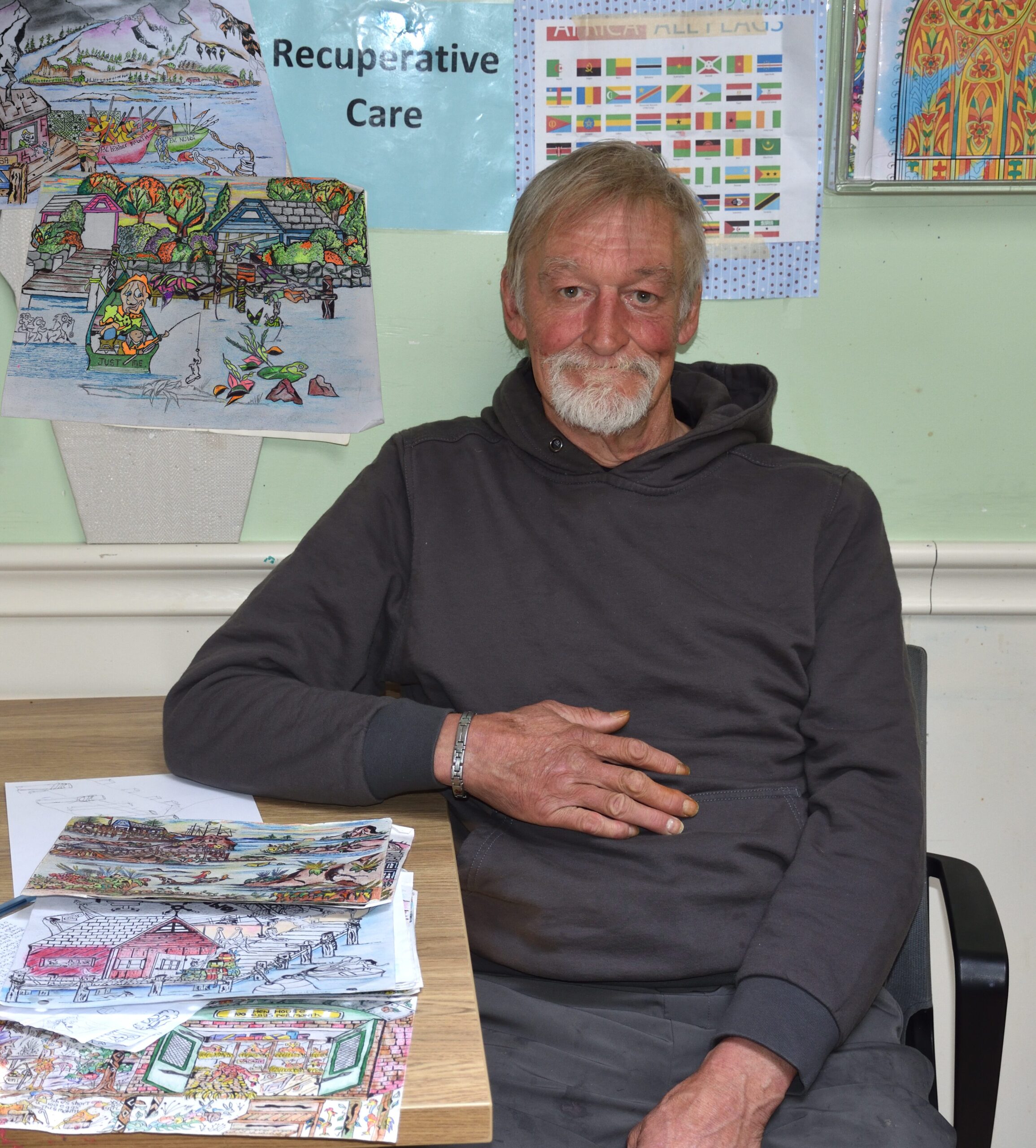
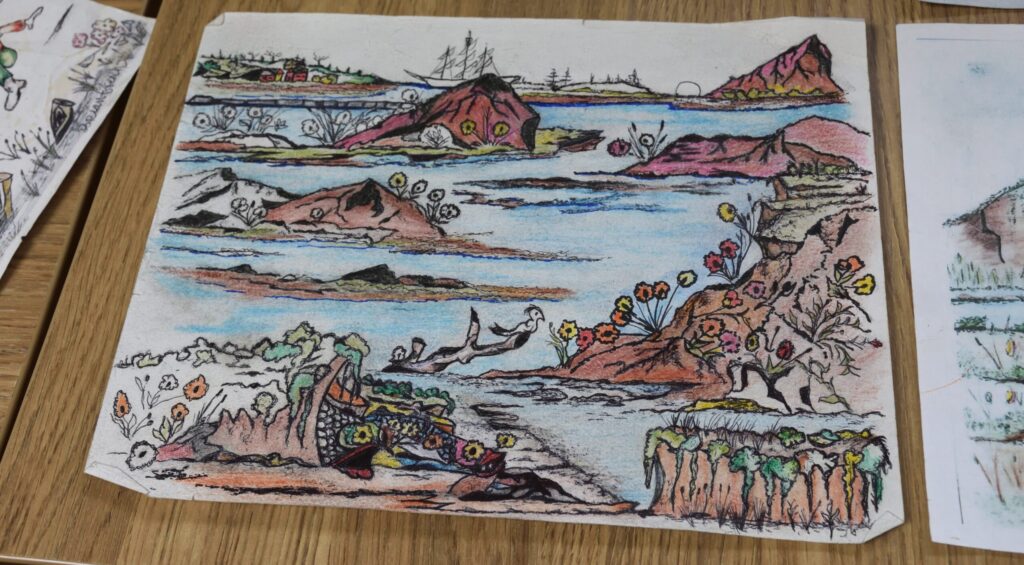
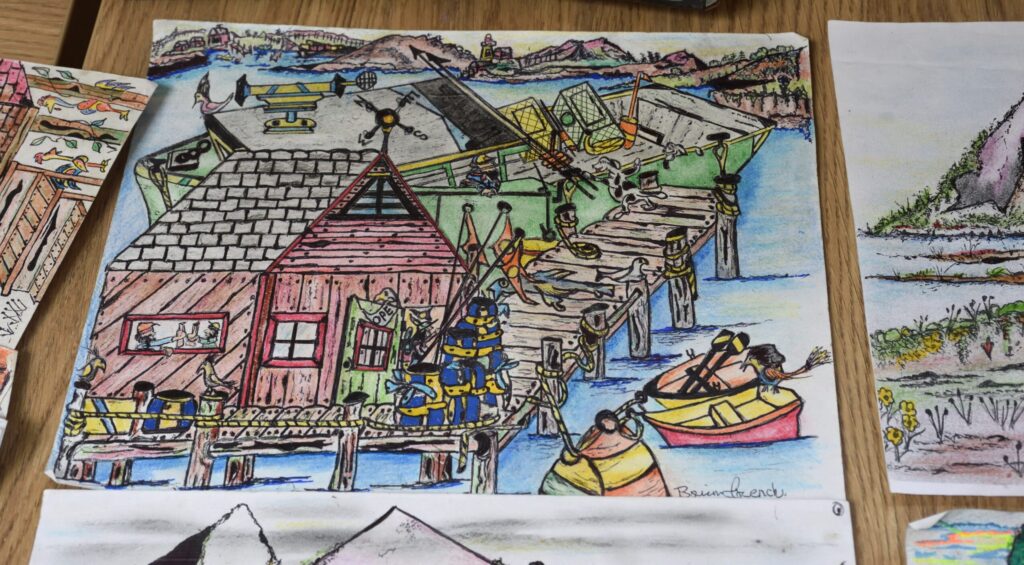
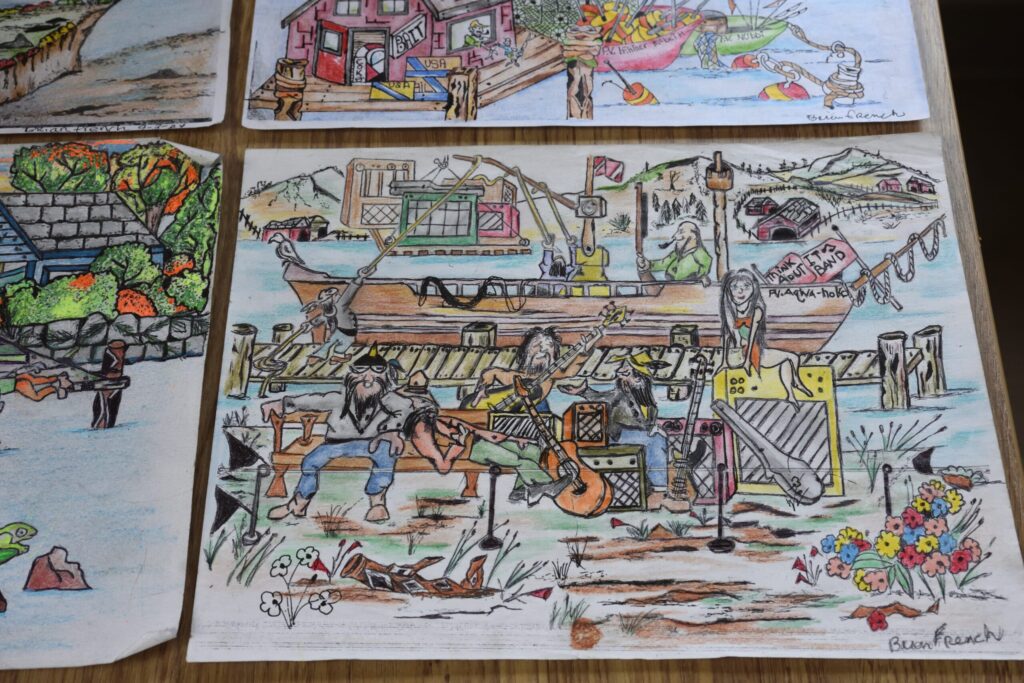
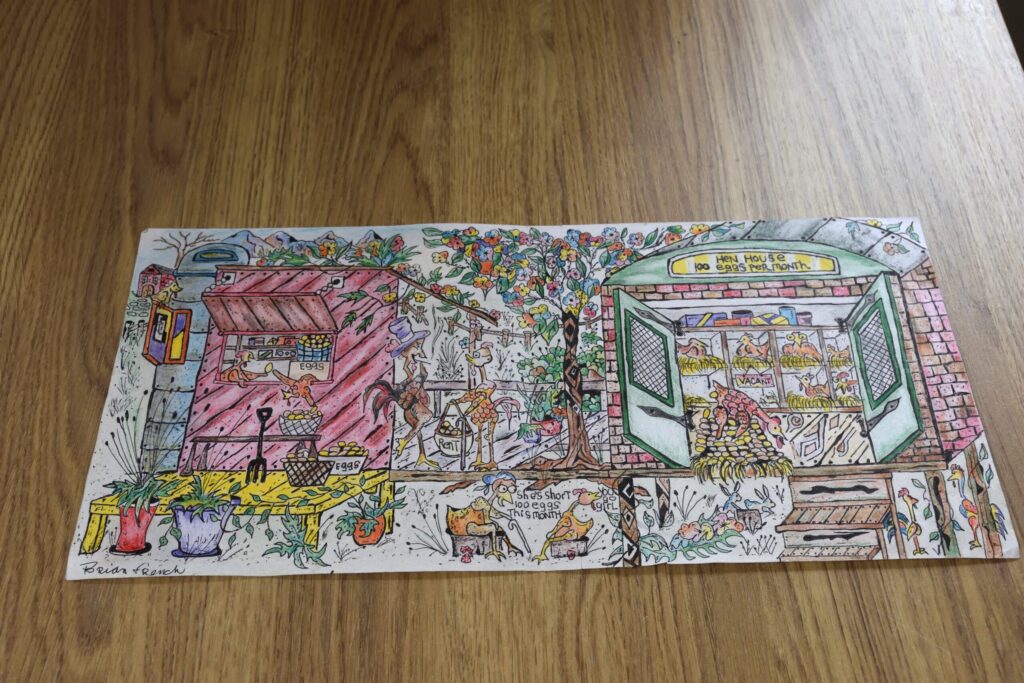


Sitting at a table at the Recuperative Care Program (RCP), Brian lays out pages of his art. “I’m working on making a children’s coloring book,” he says. Most of the pieces he has laid out are of captivating coastal scenes featuring birds, boats, and buoys. The longer you look at each page, the more you’ll spot new scenes within each picture. For the coloring book, he plans to hide a letter of the alphabet on each page.
“I’ve known since I was a kid that I was good at drawing,” Brian, now in his early sixties, shares. “I’m glad I finally have time to do it. Out in the street, none of this happens. I’ll sit and try to draw, and the police just push me along. I have to keep moving. Or my folder of drawings gets stolen. I can do my work best here at the RCP. I mean, I’ve been able to sit down, the people are nice. This place has been an absolute blessing.”
Before needing urgent medical care and recovery this summer, Brian had been living on the streets of Portland for about eight years.
“Every day a little piece of you leaves, you know?”
The Recuperative Care program, which turned three this month, is a partnership between Preble Street, Maine Health Maine Medical Center, and Greater Portland Health. This innovative program is the first of its kind in the state, and provides a space for people experiencing homelessness to rest, heal, and connect with medical care and social work providers after being released from a hospital stay. The program served 129 individuals over the last year.
Brian recently had surgery on his leg and was able to stay for several weeks to recover. Recuperative care services include short-term medical care and case management provided to individuals recovering from an acute illness or injury that would be exacerbated by their living conditions (e.g., street, shelter, or other unsuitable places).
He fell into homelessness several years ago. “My mom passed away, and after that my wife died. The only family I have left is my adult son. After my wife died, the bank took the house. I sold the boat, sold the bike, sold the camper, sold the car, sold the truck, sold my diving gear, and then I started drinking.”
His time at the RCP provided him a respite from daily survival on the streets, and along with prolifically creating art, he began working with caseworkers on ending his substance use, getting long overdue medical and dental care, and working on applications for permanent housing.
“Being able to rest at this place has given me the freedom to heal. That is the number one thing it has done for me. I’ve been able to settle down and think about where I am, what’s happened, what I did wrong. My son recently said, ‘Dad, you’re the only thing I got left.’ That’s something that really sticks with you. So, I gotta get better for him.”
In an ideal world, Brian would have gone right from his bed at the Recuperative Care Program into an apartment or other more permanent living situation. But the freeze on housing vouchers and lack of affordable housing means it takes longer and longer for individuals to end their homelessness.
Recovered from his surgery with none of the housing applications being approved yet, Brian is living outside again. The hope is that he can stay connected with his caseworkers and services and get into housing in the near future. In the meantime, he is considering joining an art group at the Preble Street/MaineHealth Learning Collaborative, so that he can keep working towards healing.

Supportive housing works – let’s protect it!
TAKE ACTION: More than 1,200 people in Maine could potentially lose their housing over the next year and be forced out onto the street. The impacts to communities across the state would be devastating. Please contact your members of Congress to tell them that HUD funding must prioritize permanent supportive housing! Senator Susan CollinsWashington D.C. (202) 224-2523Portland, ME (207)
“A safe place out of the cold” – Maine’s only Recuperative Care Program
“How far staff was willing to go to help me succeed.” “Having my own private room and space for healing.” “Knowing I could just relax and focus on my health.” “Having a place to be out of the cold with people who took care of me well.” These are a few responses from clients exiting
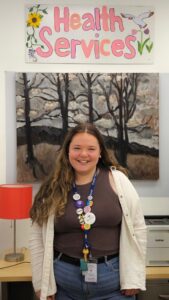
Staff highlight: Ella Dempsey-Blair “My clients give me hope”
Preble Street staff are #CompassionInAction, and we want you to get to know them! This month, we’re introducing you to Ella Dempsey-Blair, Case Manager at Health Services Name, title, and program: Ella Dempsey-Blair, Case Manager for Preble Street Health Services at the MaineHealth-Preble Street Learning Collaborative. I’ve worked here for over a year and a half.