When someone is focused on day-to-day survival, there is little time to attend to long-term goals. Accessing the limited available resources requires sorting through a convoluted web of systems and can be impossible to navigate alone.
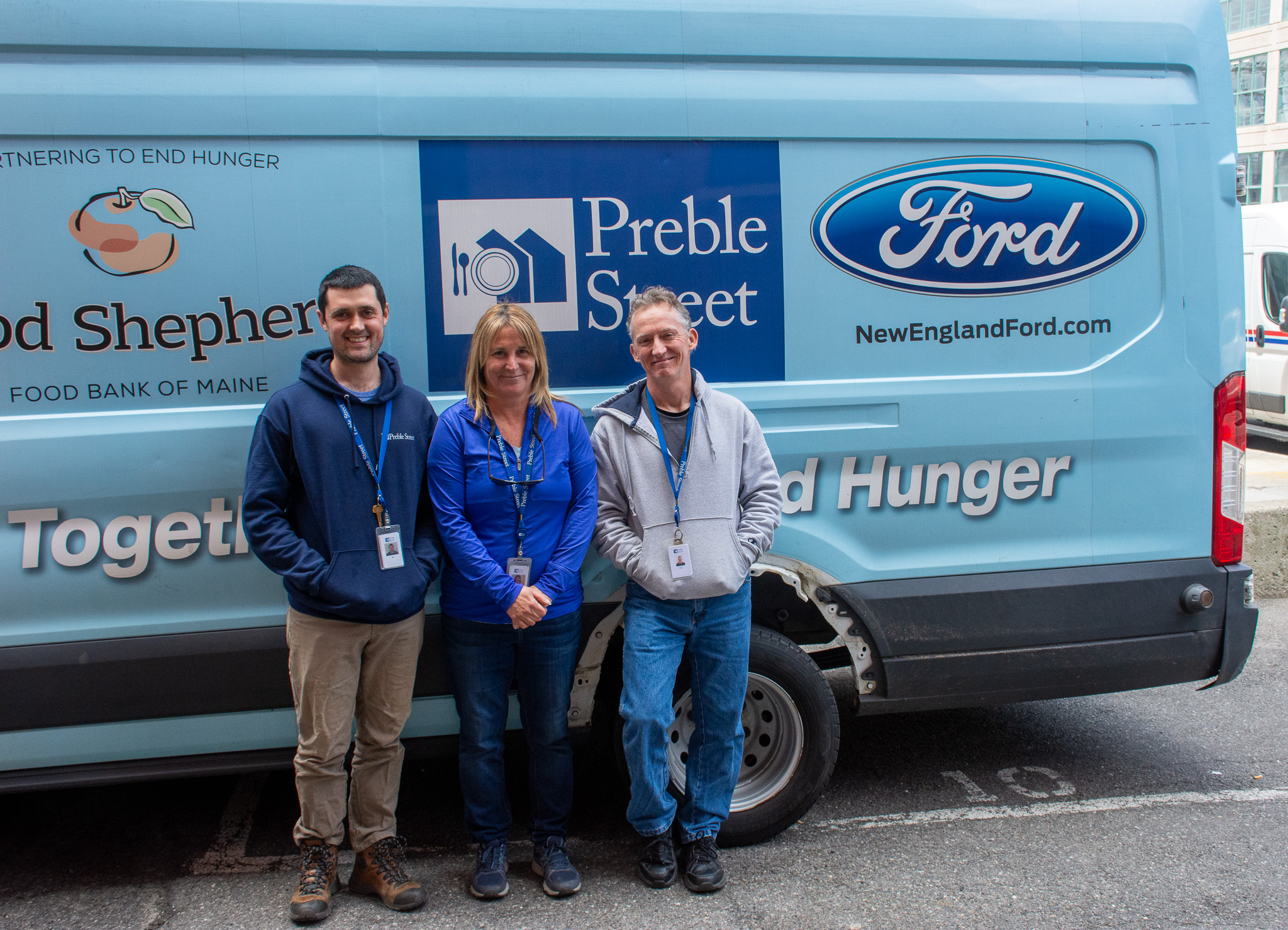
Every day for the past 5 years, the small but mighty Street Outreach Collaborative (SOC) at Preble Street works tirelessly to meet the basic needs of hundreds of people experiencing unsheltered homelessness in Portland. Over the last year, this four-person team has provided services to 290 clients and has helped 1,308 individuals since the program was formed five years ago.
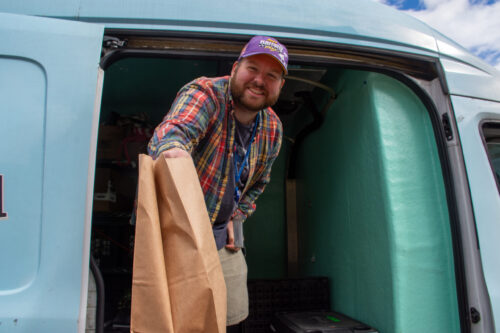
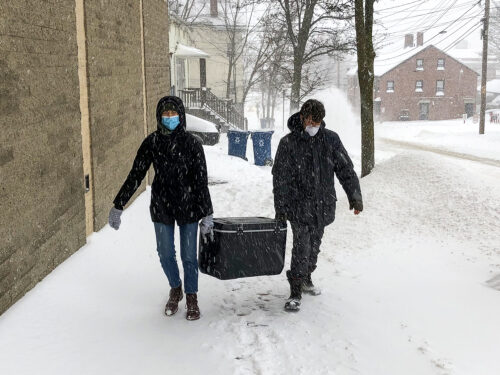
From its early days operating in the midst of the pandemic, the SOC has been a lifeline for people living outside. Collaborating with partner organizations throughout the city, they help meet the immediate needs of clients — including food, shelter, weather-appropriate clothing, health services, and IDs — while also connecting them with services to meet their longer-term goals like housing, health care coverage, and employment.
“The easiest way to connect to people is by offering them something,” shares Tim Duffy, a frontline staff member on the Preble Street Food Programs and Street Outreach Collaborative teams. “Starting with food and with basic needs items, we’re able to connect people who are ready to different resources. And then for those who may not be ready yet, it’s just a lifeline to keep them going.”
While the team’s main focus is on connecting people with basic services, over time, it can become much more. In the fall of 2023, the SOC connected with Marty, who was living in an encampment in the city. They connected him to Portland’s largest shelter, the Homeless Services Center, where he stayed for the majority of the winter. Eventually, they were able to help him acquire a housing voucher, and he began working with the Preble Street Rapid Re-Housing team. In January 2025, he moved off the streets and into housing. The relationships caseworkers build with clients are the foundation for supporting them in reaching these goals.
SOC caseworker, Bob Avery, shares client’s story:
With the current gaps in our systems, which will only be increased as more and more federal support is defunded, it can take months or even years for an individual to put their life back together.
Often, society sees someone living on the street, all their possessions in tow, and makes snap judgements as to how they got there, and how they should get out. Preble Street caseworkers get to know each person’s name and story. They see them as the individual, resilient human beings they are.
It is partly through this work and these stories that Preble Street caseworkers know that homelessness is not caused by personal failure. It is caused by failed systems.
“We’re hyper visible, but invisible,”
– Portland community member experiencing homelessness.
In a time when many of us are struggling to afford basic human rights like food, housing, and health care, it only takes one emergency to lose the roof over our heads. Most people are forced into homelessness by circumstances beyond their control.
Once a person becomes homeless, they find that most Maine shelters are full every night, and there are barriers, like location or rules that separate people from a loved one or pet, that can make those shelters inaccessible. This results in many of our fellow Mainers living outside, in locations and conditions not fit for human habitation.
Meanwhile, there is a severe shortage of resources to help people move out of homelessness. While the SOC team is heroic in many ways, the current freeze on housing vouchers, lack of affordable housing units, unavailability of shelter beds, and limited resources for access to quality mental and medical care or treatment for substance use disorder make it very difficult for people to take those first steps forward.
To end homelessness, even to make it rare and non-recurring, we need to ensure that people have access to the basic human rights they need to survive. Instead of working to fix these upstream problems, the federal government continues to erode the few resources we have left. The recent gutting of SNAP, Medicaid, and Street Outreach funding for unsheltered youth will all lead to an increased number of unhoused Mainers, and longer bouts of homelessness.
Despite all this, the SOC maintains a deep and unwavering commitment to the people they work with. Not only do they help meet basic needs, but they are also true advocates for people experiencing unsheltered homelessness, working in a collaborative and productive manner that creates the possibility for real change to occur. When you see them out in the community, please thank them for their work. And when you see people struggling and living outside, look at them through the SOC team’s eyes.